Are you looking for a Chapter 7 bankruptcy lawyer in Peoria, IL?
At Pioletti Pioletti & Nichols, we have Chapter 7 bankruptcy lawyers with more than 80 years of combined experience guiding clients through complex matters.
If you are weighing Chapter 7 bankruptcy in Peoria, an attorney can tell you whether you qualify and what a discharge would erase. Our Peoria, IL Chapter 7 bankruptcy lawyer handles consumer and small business filings across central Illinois. Joe C. Pioletti represents individuals and businesses in bankruptcy matters, and this firm has worked in debt relief for decades. Filing involves deadlines, disclosures, and schedules that must be accurate when they are submitted. We prepare and manage that process on your behalf. Schedule a consultation to find out what your options are.
Chapter 7 Bankruptcy Lawyer Peoria, IL
The Peoria divisional office of the U.S. Bankruptcy Court for the Central District of Illinois receives filings from 16 counties, including Peoria, Tazewell, Woodford, Marshall, and Rock Island. Your county of residence determines which office handles your case.
Chapter 7 is a liquidation bankruptcy. A court-appointed trustee reviews what you own, sells any property not covered by an exemption, pays creditors from the proceeds, and discharges the qualifying debt that remains. Most people who file lose no property at all. Illinois exemptions protect ordinary household belongings, and a large share of consumer cases close with no assets for the trustee to administer.
Types of Chapter 7 Bankruptcy Cases We Handle in Peoria
Chapter 7 filings in Peoria tend to arise from a small number of recurring pressures, including revolving credit that outpaced household income, a medical event, a repossessed vehicle, or a wage garnishment. The chapter operates the same way in each situation, but the assets at risk and the urgency of the filing change considerably. The matters below account for most of the Chapter 7 work our Peoria bankruptcy attorneys handle.
- Credit card debt. Unsecured balances are the most commonly discharged obligation in a Chapter 7 case. Interest and collection activity stop on the day the petition is filed, including calls, letters, and pending collection lawsuits. Balances already reduced to judgment are treated the same way.
- Medical debt. Hospital and provider balances are unsecured and dischargeable, including accounts sent to collections or reduced to judgment. We assess whether filing now or after pending treatment better serves your circumstances, since debts incurred after the petition date are not covered by the discharge.
- Wage garnishments. Filing triggers an automatic stay that halts an active garnishment. We notify the employer and the creditor’s counsel so the deductions stop promptly, and we evaluate whether recently withheld wages can be recovered.
- Foreclosure. A Chapter 7 filing pauses a scheduled foreclosure sale, which creates time to sell the property, negotiate with the lender, or relocate. It does not cure arrears, and we say so directly when a client intends to keep the home.
- Vehicle repossession. Whether you retain a financed vehicle depends on your equity, your payment history, and the agreement you reach with the lender. We work through that analysis before you commit to continuing a loan.
- Debt collection harassment. Repeated calls, threats of arrest, and misstatements about a collector’s authority are common complaints. The automatic stay ends creditor contact, and conduct occurring before the filing may be separately actionable.
- Personal loans. Short-term and installment loans carrying rolled-over balances are unsecured and generally discharged. Borrowing shortly before a filing draws trustee scrutiny, so the timing of the petition matters.
- Personal guarantee debt. Sole proprietors and owners who guarantee company obligations can frequently discharge that exposure through a personal filing, which removes the individual liability without resolving the business entity itself. We review the guarantee language before recommending a chapter.
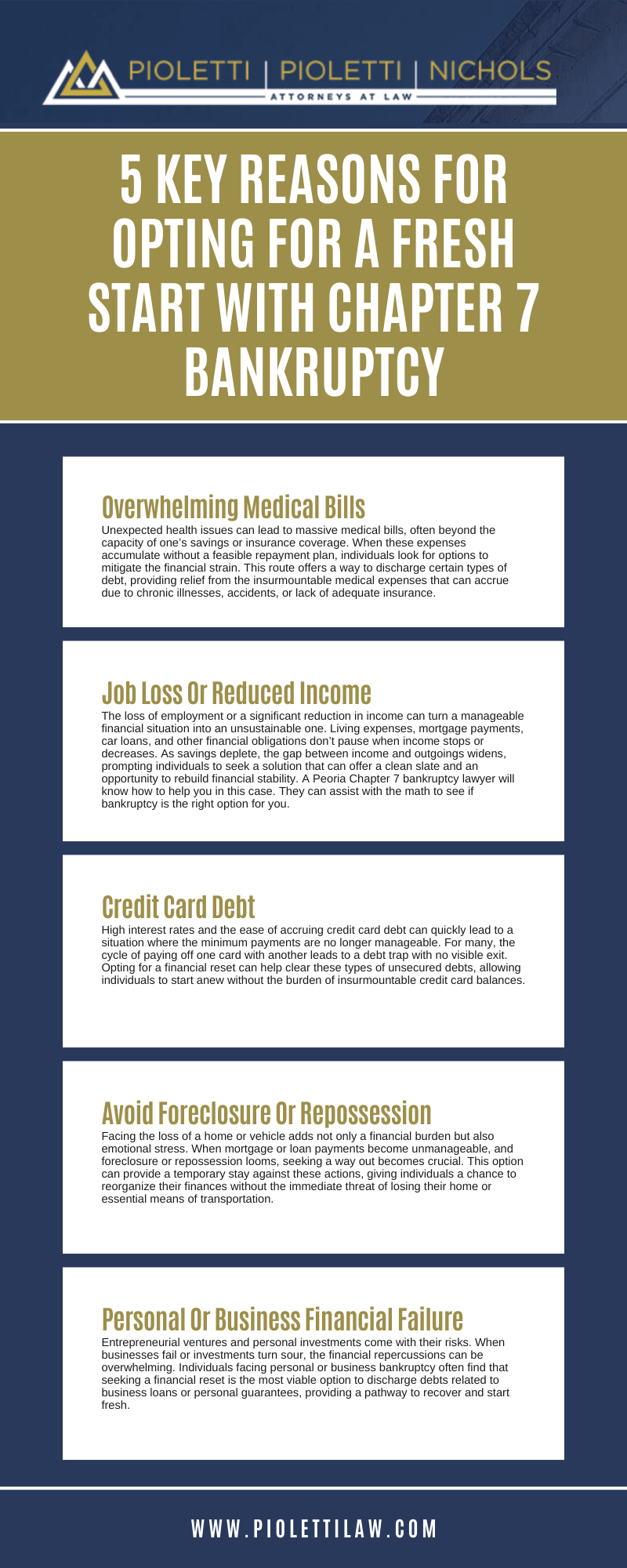
Peoria Chapter 7 Bankruptcy Infographic
Why Choose Pioletti Pioletti & Nichols as my Chapter 7 Bankruptcy Lawyer in Peoria, IL?
Decades of Bankruptcy Practice in Central Illinois
Joe C. Pioletti represents clients in individual and commercial bankruptcy. He is licensed in Illinois and admitted to practice in the U.S. District Court for the Central, Northern, and Southern Districts of Illinois, along with the Northern and Southern Districts of Indiana. He completed his law degree at Southern Illinois University School of Law and his undergraduate work at Eureka College, and he belongs to the Illinois State Bar Association. Admission in the Central District is what allows a bankruptcy lawyer in Peoria, IL to move a case efficiently through the Peoria office.
A Filing Practice Built on Volume
This firm draws on more than 80 years of combined attorney experience across consumer filings, commercial filings, and the garnishment and repossession emergencies that prompt most first calls. That experience allows us to assess early whether Chapter 7 fits your circumstances or whether another approach serves you better. Consultations are free.
What Is Important To Understand About Chapter 7 Bankruptcy Cases?
Chapter 7 vs. Chapter 13 and What Qualifies
Eligibility depends on household income and on what you are trying to protect.
- Income. The means test compares household income against the state median for a household of your size. Income below the median generally qualifies you, and a longer calculation applies above it.
- Property. A discharge eliminates debt but does not prevent a secured creditor from eventually recovering collateral you cannot pay for.
- Arrears. Chapter 13 allows missed mortgage or vehicle payments to be cured through a repayment plan. Chapter 7 does not.
- Business structure. Companies intending to continue operating are usually better served by Chapter 11 reorganization.
- Prior filings. An earlier discharge can bar a new Chapter 7 filing for a period of years.
We determine which chapter applies during the first meeting, and the answer often depends on facts clients do not expect to matter. Whether you qualify for Chapter 7 can change with a recent raise, a second job, or a household size that shifted mid-year.
What Are Important Aspects of a Chapter 7 Bankruptcy Case?
Disclosure and exemptions determine the outcome of most consumer cases. Everything you own and everything you owe belongs on the schedules, including property you believe has no value and debts you intend to keep paying. Omissions are usually accidental, but they still create problems. A trustee who identifies an unlisted account or an undisclosed transfer will ask about it, and the response shapes how the remainder of the case proceeds. Preparing the schedules carefully at the outset is far easier than correcting them under questioning.
- Complete schedules of assets, debts, income, and expenses
- Exemptions claimed correctly so property stays protected
- A reaffirmation agreement evaluated carefully before any secured loan is continued
- Cooperation with the Chapter 7 trustee on documents and questions
- A realistic assessment of the debts bankruptcy cannot discharge, including support obligations and most student loans
What Is The Chapter 7 Bankruptcy Case Timeline?
A straightforward consumer case generally runs four to six months from filing to discharge. Preparation before filing is often the longest stage, because it depends on how quickly documents come together. Cases involving property the trustee intends to sell take longer to close.
- Consultation, document collection, and the pre-filing credit counseling course
- Petition and schedules filed, with the automatic stay taking effect immediately
- Meeting of creditors roughly a month later, conducted virtually in this district
- Debtor education course completed
- Discharge entered, typically about two months after the creditors’ meeting
What Should You Bring to Your Chapter 7 Bankruptcy Consultation?
Documents gathered in advance expedite the assessment process. We ask clients to bring the following items when possible.
- Recent pay stubs and the last two years of tax returns
- Statements for credit cards, medical bills, loans, and collection accounts
- Titles or loan documents for vehicles and real estate
- Any garnishment notice, foreclosure filing, or lawsuit you have received
The consultation is free. We review your income, identify what a discharge would eliminate, and give you a direct answer on which chapter fits, usually within that first meeting. If filing is not the right step, we will say that as well. Clients facing an active garnishment can also ask us how to stop garnishments at the same appointment.
Central District of Illinois Bankruptcy Court and Local Resources
Cases from Peoria County are filed with the U.S. Bankruptcy Court for the Central District of Illinois at 100 N.E. Monroe Street.
- The U.S. Trustee Program administers the virtual meetings of creditors used throughout this district.
- The court publishes the counseling and education providers whose certificates the Peoria office accepts.
- The judiciary maintains national guidance on approved counseling providers and a plain-language overview in its Bankruptcy Basics materials.
- The district trustee list identifies the panel trustees assigned to Central District cases.
Reach Out to Pioletti Pioletti & Nichols to Schedule a Consultation
Our Peoria Chapter 7 bankruptcy attorneys offer free consultations. You will leave the first meeting knowing whether you qualify, what a discharge would cover, and what happens to your home and vehicle. Contact us to schedule an appointment. We return calls and messages promptly.
Client Reviews

We are Members of